Understanding the experiences of young people not in education, employment or training (NEET) in Blackpool
There has rightly been significant attention given to the nearly one million young people (aged 16 – 24) who are currently NEET, however there has been little work that speaks directly to young people on their perceptions.
From last year’s State of the Nation we know that those from the most disadvantaged backgrounds are nearly two and a half times more likely than those from the most advantaged background to be NEET making this an important social mobility challenge.
The report seeks to better understand the local factors behind these statistics through an in-depth exploration of the experiences of young people who are NEET in Blackpool.
Blackpool has one of the highest rates of 16 – 24 year olds not in education, employment or training (NEET) in the country, with recently published 2021 Census data showing that more than 1 in 5 are affected. The situation has not improved since, with Blackpool still having one of the highest rates in England of young people at risk of becoming NEET in 2026.
Key findings
By discussing with young people how they became NEET, the obstacles they face and what they need to get into work or training, four ‘personas’ with similar circumstances were identified:
- More intensive support needs: young people managing multiple or overlapping immediate pressures such as housing instability or caring full-time for a sick or disabled relative, often furthest from work or training and focused on managing day-to-day crises.
- Health issues constraining ambition: young people whose ambitions are constrained by mental or physical health conditions or neurodivergence, many of whom have qualifications and clear aspirations but struggle to access the right support.
- Lack of pathway awareness: young people who were ready for work or study but don’t know how to get there, often applying for jobs repeatedly with little success and declining confidence as a result.
- Qualified but misaligned: young people with qualifications and ambition who cannot find local roles that match their skills, frequently held back poor transport and the local labour market.
Madi and Riyaadh, two of the young people who helped co-design the research, now youth advisers at Blackpool Council, look back on their experiences of being NEET.
Read the full report, Understanding the experiences of young people not in education, employment or training (NEET) in Blackpool.
Download the full report as a PDF.
The young people involved in the research have developed a creative product to summarise its findings.
Sarah Yong, Deputy CEO, Youth Futures Foundation
“Understanding the diverse individual and structural factors that shape young people’s experiences in Blackpool, and how these factors interact, is essential to building a local system that not only supports young people but meets them where they are. The experiences shared through this report demonstrate why listening to young people’s voices is critical to designing effective local solutions.
“While the report also highlights the significant challenges many young people in Blackpool face, it is encouraging to see recognition of the Risk of NEET Indicator approaches that local stakeholders are pioneering as part of our Connected Futures programme. This work demonstrates how local collaboration, informed by young people’s insights and underpinned by evidence, can help create a better system approach for supporting young people into education, employment and training.”
Felicity Halstead, CEO and Founder, GoodWork said:
“The Social Mobility Commission’s research rightly highlights the systemic issues and regional disparities holding young people back. While the report’s focus is on Blackpool, its findings mirror what we see working with young Londoners from lower socioeconomic backgrounds too, with insecure housing, caring responsibilities and unmet health needs forming compounding barriers to work.
“Tackling the NEET crisis requires early intervention and sustained, relational support for these young people through school and beyond, including having a trusted adult in their corner. Investment and a joined-up approach for change is needed to address a moral failing toward young people across the country, with policymakers, employers and educators all needing to play their part.”
Lord David Blunkett said:
“This is an extremely timely piece of research, which I know will inform the final report from Alan Milburn and reinforce the commitment of Pat McFadden, Secretary of State for Work and Pensions, and the government of Andy Burnham, to face up to and tackle the scourge of worklessness and isolation.
“This analysis gives us the kind of evidence which will inform coherent and joined-up interventions and ensure we don’t have to keep on relearning lessons that have already been observed and understood.
“I commend the Social Mobility Commission in publishing this work.”
Phillip Hollis, Programme Manager, The Platform said:
“This report highlights what those of us who work with NEET young people in Blackpool know all too well: there is no single NEET experience. Young people become NEET for a wide range of reasons, often shaped by barriers beyond their control.
As I read this report, the voices and stories of our young people shone through. A particular strength of the report is its use of personas, developed from the experiences and voices of local young people. They provide a shared language and a practical framework for shaping more effective support. This report and its recommendations are another important step in helping us improve outcomes for young people and continue making Blackpool a town of talent and opportunity.”
Professor Lindsey Macmillan, Professor of Economics and Founding Director of the Centre for Education Policy and Equalising Opportunities said:
“This research challenges some of the common misconceptions about young people who are NEET. It shows that many are navigating complex barriers linked to health, family circumstances and limited local opportunities, while still holding clear ambitions for the future. The report makes a strong case for more joined-up, place-based support that recognises the very different experiences and needs of young people, and helps connect them with the opportunities they need to thrive.”
Related content

Conversations with NEETs: Research reveals daily lives and struggles of young people in Blackpool
Social Mobility Commission lifts the lid on the reality for young people not in education, employment or training (NEET) in Blackpool Report recommendations co-created with young people, not for them… read more
Topics

Young and NEET in Blackpool: upcoming research on their realities
Next week, the Social Mobility Commission will be releasing our in-depth research into the daily lives and experiences of young people not in education, employment or training (NEET) in Blackpool…. read more
Topics
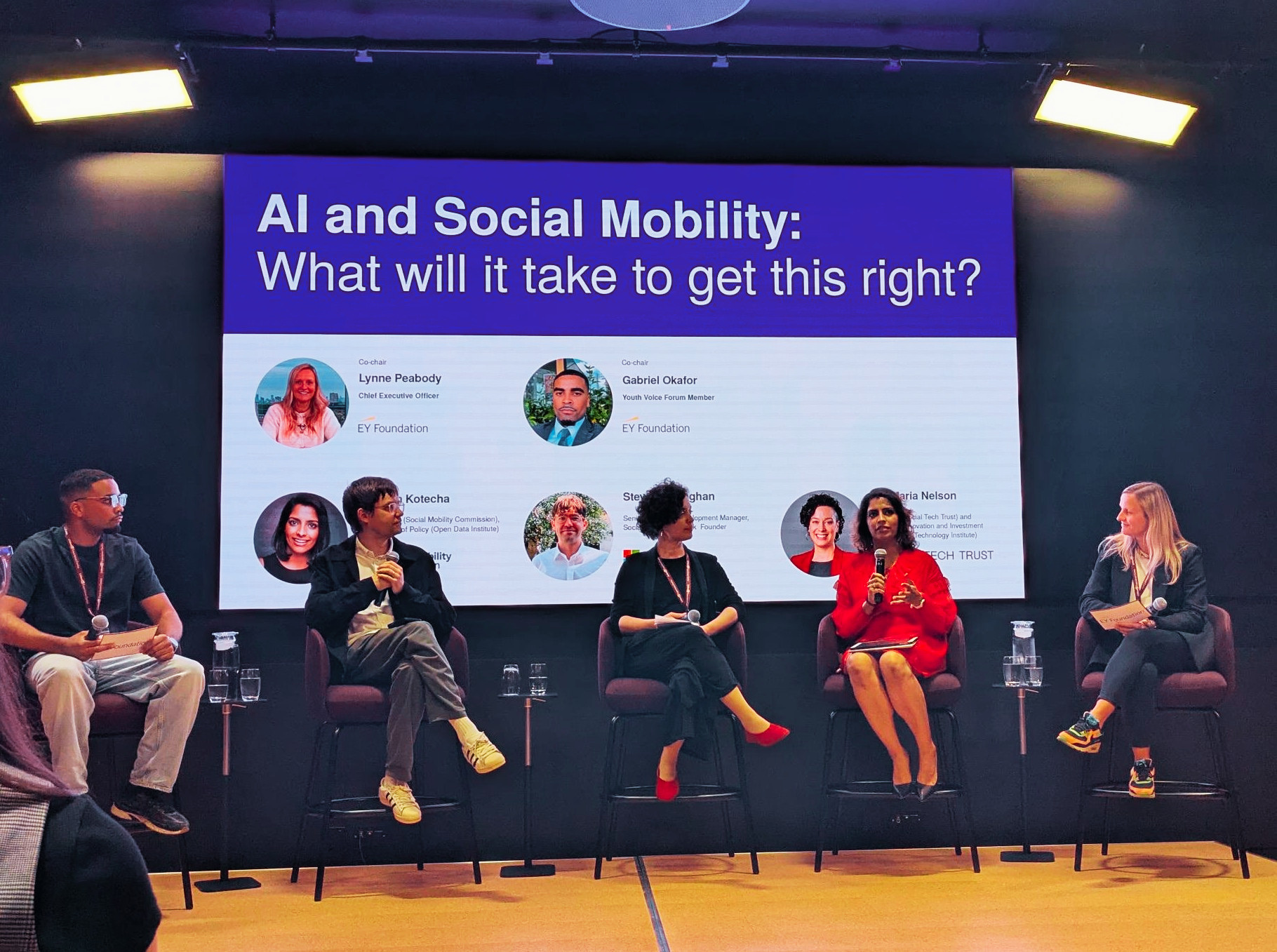
Meet the finalists in the first AI and Social Mobility Challenge Prize
Eight ventures have been announced as finalists in the inaugural AI and Social Mobility Challenge Prize, a new programme exploring how AI and emerging technology can widen access to opportunity… read more