Young and NEET in Blackpool: upcoming research on their realities
Next week, the Social Mobility Commission will be releasing our in-depth research into the daily lives and experiences of young people not in education, employment or training (NEET) in Blackpool.
Over the last year, the Commission has been piecing together the story in Blackpool – co-designing solutions through conversations with young people that are currently, or were, NEET, local leaders, employers and community organisations.
Why just one place?
Too often, policy-makers try to fix national issues with a one-size-fits-all mindset.
Nearly a million young people in the UK are currently classed as NEET, and projections are that this figure will rise further, the Commission wanted to put “place” at the heart of diagnosing the causes of, and solutions to, this national issue.
We wanted to hear:
- What do young people see as the barriers (both current and past) in why they are not in education, employment or training?
- What does their day-to-day life look like and what are their aspirations?
- What do they think would actually help young people in Blackpool?
Blackpool in numbers
Blackpool records the highest risk of young people being NEET in the North West, and the joint second highest in England. Existing statistics can start show the challenges currently facing Blackpool:
- Only around a third (37.4%) of pupils achieved grade 4 or above in English and maths in 2025/26, (2nd lowest rate in UK)
- Nearly half (46.4%) of Key Stage 4 pupils were eligible for Free School Meals in 2024/25 (8th highest in England)
- More than one in five pupils were persistently missing school in 2026.
- 5th highest permanent exclusion rate in England in the 2023/24 academic year.

Blackpool boomed – 19th Centry
The arrival of railways in the 1840s made Blackpool the go-to seaside escape for nearby industrial workers. The local economy grew rapidly as the coastal charm of its leisure, hospitality and entertainment venues pleased holidaymakers and local residents who benefitted from consistent jobs and income for the local community.
But then bust – 20th Century
Deindustrialisation saw Blackpool’s main source of nearby holidaymakers rapidly move away to different areas or have less income to spend after becoming unemployed. Then, around the 1970’s and 80’s – Brits looking for a break, could now afford the increasingly affordable flights and cheap package holidays abroad, opting for the beaches of Benidorm over Blackpool. The jobs and income in Blackpool declined sharply.
The job market today
While Blackpool still attracts seaside tourists, the rapid decline from what it once was, has left a shrinking local job market dominated by seasonal, low-paid and low-skilled jobs.
Though there are signs of diversification of the local economy, young people growing up in Blackpool today are clearly still feeling the legacy of the decline of UK seaside towns.
The generational disadvantages faced by people in Blackpool have no quick fix and school leavers are faced with limited opportunities to opt for anything other than a temporary role with limited career progression.
Coming up
While young people NEET will face many similar challenges – the complex and contrasting histories of place in the UK prove there are also significant differences.
Blackpool’s socio-economic disadvantage and tourism-led economy combine to create distinct local pressures that need local solutions.
To be the first to hear from young people that are NEET in Blackpool sign up to our mailing list, or if you are a journalist interested in receiving announcements contact smcmedia@socialmobilitycommission.gov.uk
Related content
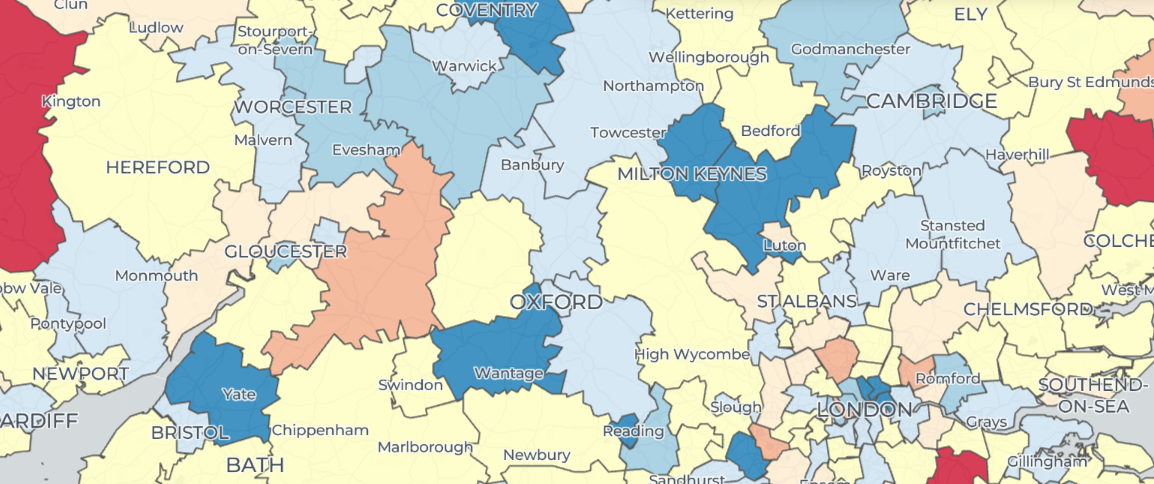
New data tool equips businesses and local leaders to tackle regional social mobility barriers
New tool helps understand the barriers to business entry, dynamism, and innovation across different parts of the UK. The Local Innovation and Economic Dynamism index equips policymakers and local leaders… read more
Topics

Do postcodes drive privilege?
There is frequent discussion of how your socio-economic background, parent’s occupation and school determine your academic achievements, job prospects and future income. But what happens when you keep climbing the… read more
Topics

Understanding the experiences of young people not in education, employment or training (NEET) in Blackpool
There has rightly been significant attention given to the nearly one million young people (aged 16 – 24) who are currently NEET, however there has been little work that speaks… read more