Conversations with NEETs: Research reveals daily lives and struggles of young people in Blackpool
- Social Mobility Commission lifts the lid on the reality for young people not in education, employment or training (NEET) in Blackpool
- Report recommendations co-created with young people, not for them
- Findings focus on four distinct ‘personas’ with different pathways and support needs for getting a job or into training
Today, the Social Mobility Commission has published a new report giving voice to young people in Blackpool not in education, employment or training (NEET), which calls on the government to make solutions tailored to individuals, place-based and locally led.
While there is substantial attention being paid to the nearly one million young people currently NEET, there has been little work that speaks directly to young people on their perceptions.
The Commission’s new report bridges this gap, having spoken directly with young people aged 16-24, local leaders, educators, employers and community organisations in Blackpool, found even within a single geographic area – their perceptions of barriers, motivations and support needed varied greatly. This proves the need for ‘national solutions’ to be rooted in an understanding of place.
The qualitative study found that both pathways to becoming NEET, the support needed and routes to employment were heavily shaped by a complex mix of a young person’s family circumstances, health and wellbeing, school experience and local labour market conditions.
By discussing with young people how they became NEET, the obstacles they face and what they need to get into work or training, four ‘personas’ with similar circumstances were identified:
- More intensive support needs: young people managing multiple or overlapping immediate pressures such as housing instability or caring full-time for a sick or disabled relative, often furthest from work or training and focused on managing day-to-day crises.
- Health issues constraining ambition: young people whose ambitions are constrained by mental or physical health conditions or neurodivergence, many of whom have qualifications and clear aspirations but struggle to access the right support.
- Lack of pathway awareness: young people who were ready for work or study but don’t know how to get there, often applying for jobs repeatedly with little success and declining confidence as a result.
- Qualified but misaligned: young people with qualifications and ambition who cannot find local roles that match their skills, frequently held back poor transport and the local labour market.
The tourism industry in Blackpool dominates its job market today, offering mainly seasonal, lower-paid entry-level roles with limited progression, however there are positive signs of diversification. Careers advice in schools was widely seen by young people as having a narrow focus, leaving them feeling unprepared to navigate education and employment pathways once they left school.
A perception of a lack of exposure to different careers, combined with restricted local opportunities and transport options, further limited young people’s ambitions and ability to progress, even for those who had not faced other significant barriers. Various young people shared:
“I feel like if you’re going to study computing in Blackpool, you should know you have to move away because there’s nothing here.”
“There’s no [opportunities] for young people. It’s just seasonal.”
“That’s why I was made redundant in January…just due to cost increasing.”
Young people consistently described feeling unsupported and demotivated by mainstream employment services which they perceived as prioritising “box-ticking” and quantity of applications over tailored, practical help that recognised their circumstances:
“…you just have to apply for a certain amount [of jobs]. But that’s just resulted in me just applying to random things that I know I won’t get…” – Young person speaking about their experience at an employment service
Whereas, local voluntary sector services were praised as delivering the kind of empathetic, tailored and practical support that made a genuine difference:
“…She got me two jobs so far […] she just helped me looking for jobs and stuff and applying, tailoring my CV. About what to say, what to do, how to act, what to wear.” – Young person speaking about a service worker
A young person spoke of the demoralising cycle of repeated rejection in a limited and hyper-competitive job market:
“There’s a point where you just feel like you’re not going to get the job, so there’s no point in applying for it. When you’ve applied for so many and you hardly even get an interview or a message back.” – Young person on their confidence
The Commission co-designed the following recommendations with young people and local organisations in Blackpool:
- Establish local NEET reduction partnerships, bringing together employers, local authorities, the Department for Work and Pensions, schools, colleges, health providers and voluntary sector organisations, to move away from transactional, quota-based job coaching and towards tailored, one-to-one support.
- Drive regional economic growth, employer engagement and infrastructure reform, including improved and discounted transport for young people, to create more local opportunities matched to young people’s skills and qualifications.
- Build better national and local data on complex needs, family dynamics and psychosocial resilience, to support earlier intervention and prevention before young people disengage.
Alun Francis, Chair of the Social Mobility Commission said:
“Blackpool is a remarkable place, with a stronger and more diverse economy than people imagine, but it also has a challenging number of young people who are NEET.
“Local agencies, including the public, private and voluntary sectors, are already working together to solve this. But they need a system for case loading young people, building effective relationships and coordinating efforts to remove obstacles to work. This excellent report shows why.”
ENDS
Notes to editors
- Media contact: celia.forbes@socialmobilitycommission.gov.uk
- Read the full report here.
- The research was conducted by IFF Research using a Participatory Action Research approach, and involved 31 young people aged 16 to 24 in Blackpool: 25 who were NEET at the time of the research and 6 who had successfully transitioned into education, employment or training.
- The research involved semi-ethnographic methods including walk-and-talk discussions and WhatsApp check-ins, alongside systems mapping workshops with local stakeholders and a deliberative workshop bringing together young people and practitioners to co-design recommendations.
Supporting statistics for reporting:
- Nearly 1 million people aged 16 to 24 (13%) were NEET between April and June 2026. While this is lower than the number for January to March, the second highest rate since before 2014 and 3% higher than the same period last year.
- Blackpool records the highest risk of young people being NEET in the North West (32.2), and the joint second highest in England. It is nearly double that of Liverpool (17.5) and more than three times that of Manchester (10.1).
- Only around a third (37.4%) of pupils achieved grade 4 or above in English and maths in 2025/26, (2nd lowest rate in England)
- 6.9% of pupils achieved no GCSEs in 2024/25 (6th highest in England)
- Nearly half (46.4%) of Key Stage 4 pupils were eligible for Free School Meals in 2024/25 (8th highest in England)
- More than one in five pupils were persistently missing school in 2026.
- 5th highest permanent exclusion rate in England in the 2023/24 academic year.
- Highest rate of looked-after children in England, at nearly three times the national average.
- Economic inactivity in Blackpool stands at 28.4%, disability claimant rates are 15.1% and 10.9% are unpaid carers – all of which are well above the national average.
Phillip Hollis, Programme Manager, The Platform said:
“This report highlights what those of us who work with NEET young people in Blackpool know all too well: there is no single NEET experience. Young people become NEET for a wide range of reasons, often shaped by barriers beyond their control.
“As I read this report, the voices and stories of our young people shone through. A particular strength of the report is its use of personas, developed from the experiences and voices of local young people. They provide a shared language and a practical framework for shaping more effective support.
“This report and its recommendations are another important step in helping us improve outcomes for young people and continue making Blackpool a town of talent and opportunity.”
Sarah Yong, Deputy CEO, Youth Futures Foundation
“Understanding the diverse individual and structural factors that shape young people’s experiences in Blackpool, and how these factors interact, is essential to building a local system that not only supports young people but meets them where they are. The experiences shared through this report demonstrate why listening to young people’s voices is critical to designing effective local solutions.
“While the report also highlights the significant challenges many young people in Blackpool face, it is encouraging to see recognition of the Risk of NEET Indicator approaches that local stakeholders are pioneering as part of our Connected Futures programme. This work demonstrates how local collaboration, informed by young people’s insights and underpinned by evidence, can help create a better system approach for supporting young people into education, employment and training.”
Felicity Halsted, CEO and Founder, GoodWork said:
“The Social Mobility Commission’s research rightly highlights the systemic issues and regional disparities holding young people back. While the report’s focus is on Blackpool, its findings mirror what we see working with young Londoners from lower socioeconomic backgrounds too, with insecure housing, caring responsibilities and unmet health needs forming compounding barriers to work.
“Tackling the NEET crisis requires early intervention and sustained, relational support for these young people through school and beyond, including having a trusted adult in their corner. Investment and a joined-up approach for change is needed to address a moral failing toward young people across the country, with policymakers, employers and educators all needing to play their part.”
Lord David Blunkett said:
“This is an extremely timely piece of research, which I know will inform the final report from Alan Milburn and reinforce the commitment of Pat McFadden, Secretary of State for Work and Pensions, and the government of Andy Burnham, to face up to and tackle the scourge of worklessness and isolation.
“This analysis gives us the kind of evidence which will inform coherent and joined-up interventions and ensure we don’t have to keep on relearning lessons that have already been observed and understood.
“I commend the Social Mobility Commission in publishing this work.”
Related content

Understanding the experiences of young people not in education, employment or training (NEET) in Blackpool
There has rightly been significant attention given to the nearly one million young people (aged 16 – 24) who are currently NEET, however there has been little work that speaks… read more
Topics

Young and NEET in Blackpool: upcoming research on their realities
Next week, the Social Mobility Commission will be releasing our in-depth research into the daily lives and experiences of young people not in education, employment or training (NEET) in Blackpool…. read more
Topics
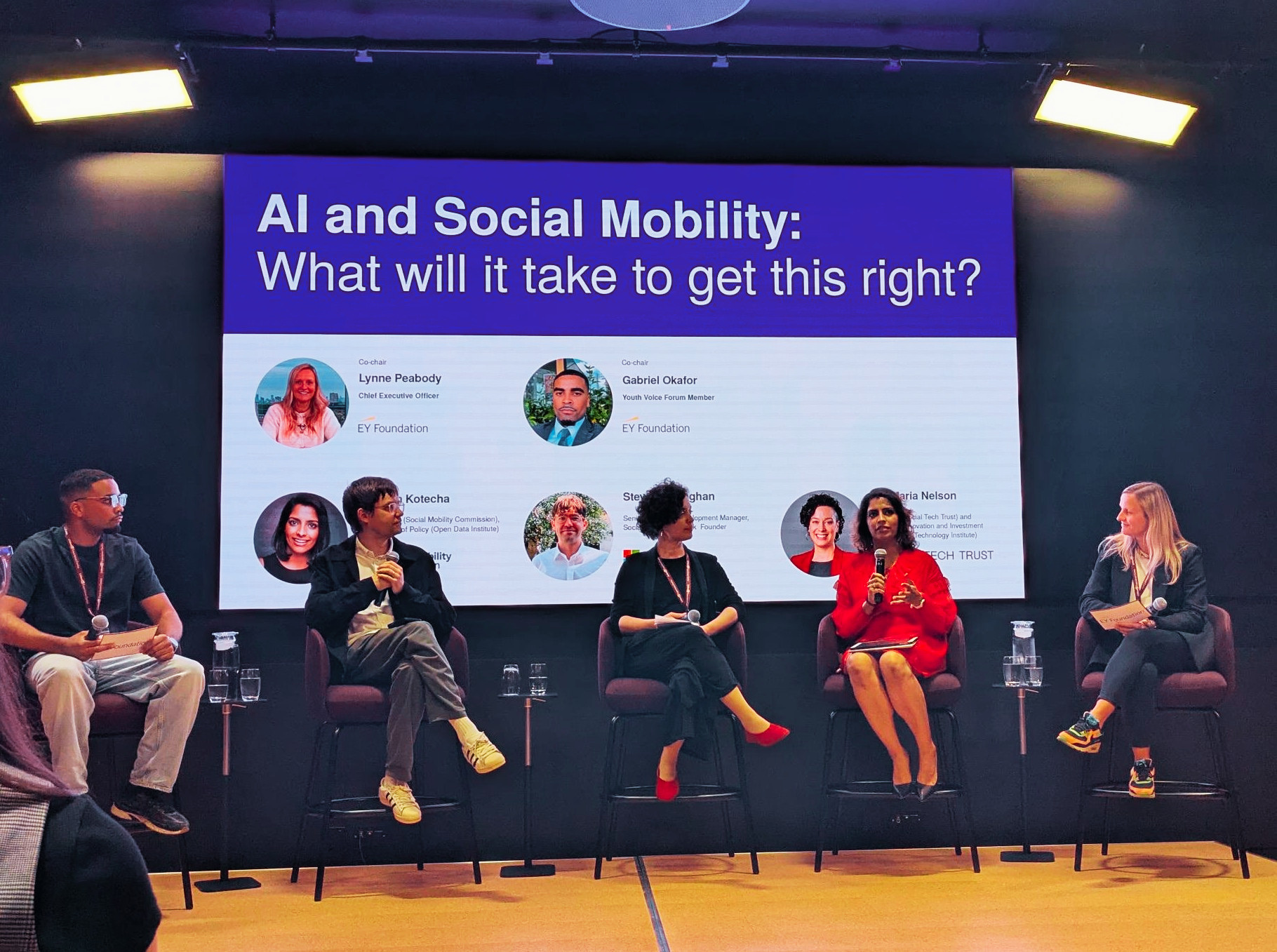
Meet the finalists in the first AI and Social Mobility Challenge Prize
Eight ventures have been announced as finalists in the inaugural AI and Social Mobility Challenge Prize, a new programme exploring how AI and emerging technology can widen access to opportunity… read more