State of the Nation 2026: Who’s getting ahead?
State of the Nation is the most comprehensive analysis of social mobility in the UK. The 2026 report finds a mixed picture of progress and setbacks in different areas of social mobility.
The 2026 edition is more thorough than ever before, updated mobility outcomes include data from the Office for National Statistics Longitudinal Study. By linking census data across five decades (1971 to 2021) in England and Wales, the report connects children’s adult outcomes directly to their parents’ position.
This provides the most authoritative baseline to evaluate long-term mobility trends across education, employment, housing, and wages.
Key findings at a glance
-
- Family background continues to influence people’s jobs throughout their entire lives. Though relative occupational mobility has improved among early-career adults as access to higher education has become more equal, it has remained the same for those in the midstage of their career.
- Despite long-term rises in parental earnings and income, young people are finding it increasingly difficult to enter the workforce. These increased pressures to enter the labour market may threaten future occupation and income mobility.
- Analysis of commuting zones, known as Travel-to-Work Areas, has revealed severe labour market disadvantages in coastal areas and areas on the Welsh and Scottish borders that standard local authority averages conceal. Looking at outcomes across socio-economic background, sex, ethnicity and disability status, shows that academic success alone does not guarantee equal career outcomes.
- Girls outperform boys across compulsory education through to university. However young women earn significantly less per hour than young men with the same qualifications and from the same socio-economic background, with female earnings plateauing much earlier in adulthood.
- There is significant disparity between academic achievement and career prospects across people of the same socio-economic background but different ethnic backgrounds.
- Disabled graduates face an 8% hourly pay gap compared to non-disabled graduates with similar qualifications and socio-economic background.
Alun Francis, Chair of the Social Mobility Commission said:
“Over successive State of the Nation reports, we have built an increasingly comprehensive and independent body of evidence on social mobility in the UK. This year’s report takes that work further, with more detailed geographical analysis of local opportunities, showing where progress has been made and where it has stalled.
At a time when the government is pursuing far-reaching reforms to how power is devolved across the country, this evidence has an especially important role to play. Effective policymaking depends on understanding the challenges facing different places and communities, so national and local leaders can focus on the right problems and deliver lasting improvements in people’s lives.”
Read the full report: State of the Nation 2026: Who’s getting ahead.The report can also be read as a HTML
The analysis used in State of the Nation 2026 has been used to update the Commission’s Data Explorer Tool. The tool allows researchers, policy makers and the public to explore detailed analysis of social mobility data across 205 areas of the UK.
Related content
‘Mixed picture’ for social mobility as Brits climb career ladder yet can’t afford a home
Commission releases annual analysis of life chances in the UK Finding education and occupational mobility improving but worsening outlooks for youth employment and chance of owning a home Life progress… read more
Topics
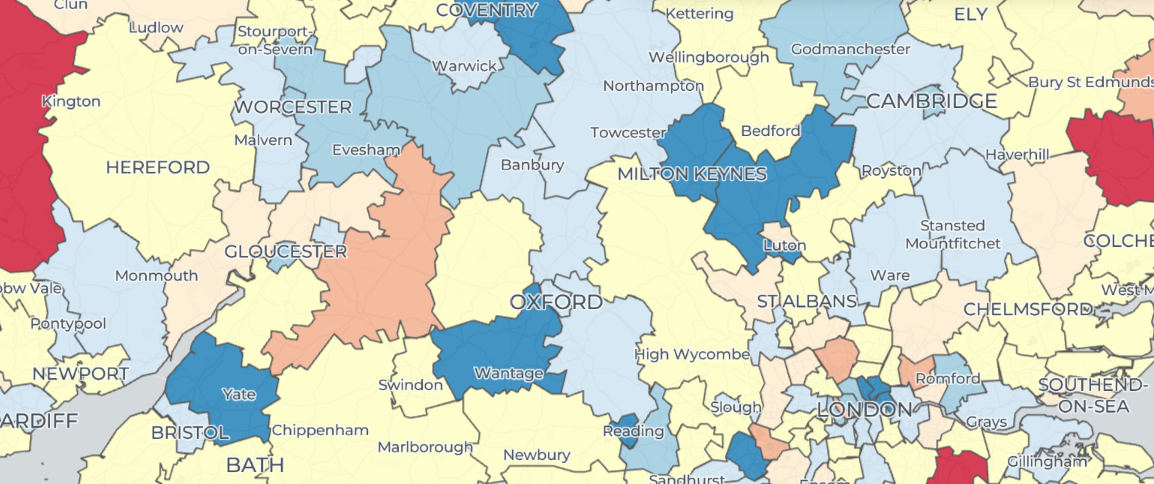
New data tool equips businesses and local leaders to tackle regional social mobility barriers
New tool helps understand the barriers to business entry, dynamism, and innovation across different parts of the UK. The Local Innovation and Economic Dynamism index equips policymakers and local leaders… read more
Topics

Disadvantaged students miss out on top universities – despite getting the grades
New rankings from the Social Mobility Commission show nearly one third of English universities are underrepresenting students of a lower socio-economic background – even when they meet the entry requirements…. read more