No ‘one’ NEET solution: Social Mobility Commission Deputy Chair joins panel on the need for national and local collaboration across sectors
This week, Deputy Chair of the Social Mobility Commission, Resham Kotecha, spoke at the Breaking Barriers Collective, an event hosted by the FE & Skills Collective and the Edge Foundation, focussed on solutions to help the UK’s over 1 million young people Not in Education, Employment or Training (NEETs).
At the end of May, the independent review into rising numbers of NEETs led by Alan Milburn published its interim diagnostic report warning of structural failures and fragmentation. On the same day, the Office for National Statistics confirmed NEET rates were at their highest for 12 years. At this pivotal moment in time, the Breaking Barriers Collective brought policy-makers, a range of experts and young people with lived experience into the same room to openly address the systematic barriers that might be causing this concerning upward trend – and crucially create practical solutions to present to the Milburn Review ahead of their full recommendation paper expected in September.
Solving sector silos
Resham joined the ‘Intersection of Policies’ panel, the debate was focussed on how systems designed to support young people need a more joined-up approach to actually be successful. While disconnected working is a frequent criticism between departments within Whitehall, Resham emphasised the importance of bringing together stakeholders outside of government and across all sectors that interact with young people.
The Social Mobility Commission has long raised alarms of the growing levels of NEETs in the UK, and particularly the need for context behind ‘overall’ figures which risk labelling over 1 million young people as one homogenous group.
The complexity and vast range of circumstances that may have led to a young person becoming NEET, not only requires not a cross-sector approach, but also locally led place-based approach.
Across education institutions, benefits systems, healthcare – every sector that interacts with young people needs to consider the regional characteristics of where they are growing up. This is because the Social Mobility Commission’s analysis has consistently highlighted the geographic inequality entrenched in the UK, meaning employment prospects and access to education – fundamental to whether someone becomes NEET, are not evenly distributed.
Resham also raised the crucial need for data sharing between government departments and local delivery partners when taking place-based approaches in order to better track trajectories and ensure no young people become ‘lost’ in the system.
Also on the panel was:
- Olly Newton, The Edge Foundation Executive Director
- Umar Akram, Department for Work and Pensions Head of Youth Strategy, Policy and Engagement
- Helen Woodward-Davies, Skills England, Non-executive Board Member
- Craig Thorley, Department for Education Head of Policy and Strategy at Department for Education
Our work on the ground in Blackpool
To avoid a ‘one-size-fits-all’ diagnosis or solutions to current NEET rates, the Social Mobility Commission is taking a place-based approach to our research, focussed in Blackpool, a region of England with one of the highest NEET risk rates. We are currently conducting qualitative fieldwork, speaking with young people, alongside mapping local support systems with stakeholders such as employers to paint an in-depth picture of personal and regional challenges.
We will be sharing our findings later this year.
Related content
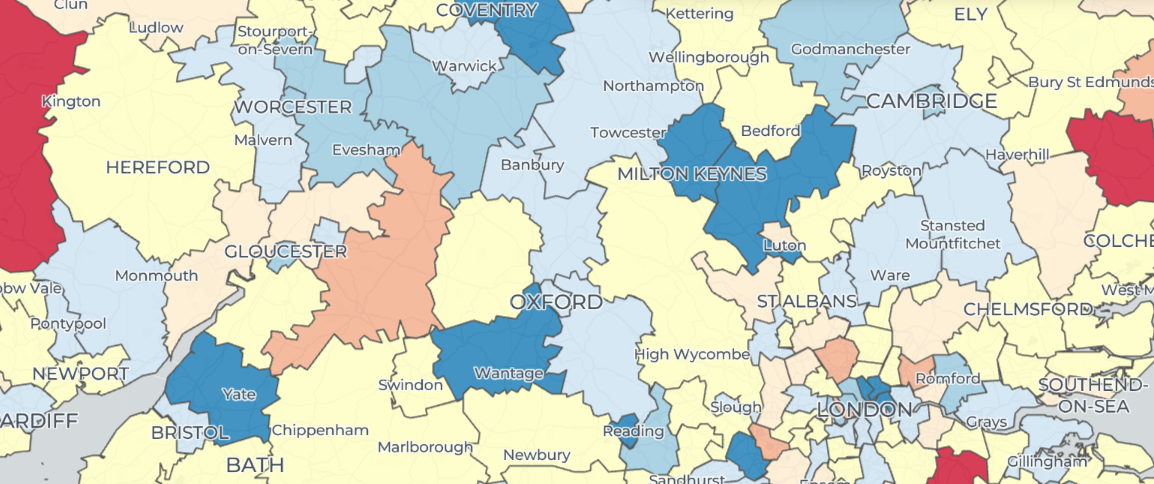
New data tool equips businesses and local leaders to tackle regional social mobility barriers
New tool helps understand the barriers to business entry, dynamism, and innovation across different parts of the UK. The Local Innovation and Economic Dynamism index equips policymakers and local leaders… read more
Topics

Do postcodes drive privilege?
There is frequent discussion of how your socio-economic background, parent’s occupation and school determine your academic achievements, job prospects and future income. But what happens when you keep climbing the… read more
Topics

Understanding the experiences of young people not in education, employment or training (NEET) in Blackpool
There has rightly been significant attention given to the nearly one million young people (aged 16 – 24) who are currently NEET, however there has been little work that speaks… read more