A step forward for place-based approaches as English Devolution and Community Empowerment Bill receives Royal Assent
A step forward for place-based approaches as English Devolution and Community Empowerment Bill receives Royal Assent
The English Devolution and Community Empowerment Bill received Royal Assent today, 29th April, and has now become an Act of Parliament – so what does this mean for social mobility?
At the Social Mobility Commission we advocate for place-based approaches to tackle the UK’s entrenched regional disparities.
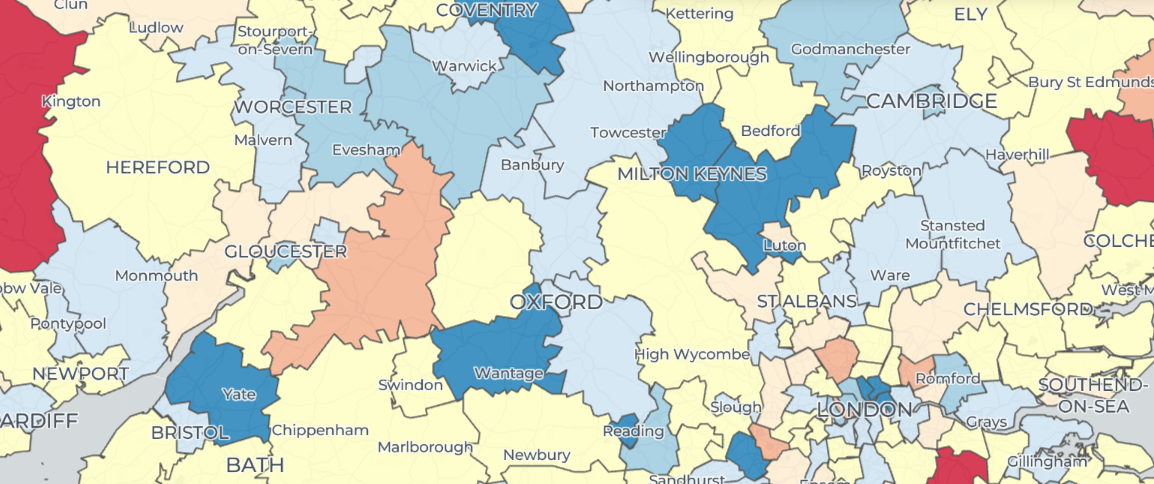
This means that where people grow up is driving their outcomes – like how well they do in school, level of income and the likelihood of being employed or out of work. Our data and analysis paints a clear picture, those living in the South East of England and London have much better chances of achieving social mobility compared to those living in post-industrial, mining towns, rural or coastal areas.
When national ‘one-size-fits-all’ policies, set by Westminster, try to remove obstacles it is impossible for them to be effective in tackling the unique issues experienced by each region. This has led to communities being left behind, regional divides deepening and regional disparities becoming entrenched.
The Social Mobility Commission has called for more powers to be devolved to local government to help address the UK’s regional inequality, and the English Devolution and Community Empowerment Bill takes a step toward this by putting more power in the hands of local leaders, like mayors, who know their areas best. Existing Mayoral Combined Authorities have demonstrated their unique ability to make more impactful and effective policy decisions when given the freedom from Westminster. They have strong local links to not only know what their residents need, but convene local stakeholders like employers, education providers, travel providers to deliver the growth and dynamism that will create the opportunities needed to deliver social mobility- something that simply can’t be done by a policy-maker miles away in Whitehall.
We welcome this new legislation as a step toward spreading more power to local leaders and the government’s agreement to encourage mayors to prioritise social mobility and utilise the Commission’s data and expertise. We call on the Government to keep pushing power and resources to the local level.
Lord Ravensdale said in the House of Lords on the Bill:
“One of the things that that committee report highlighted, along with lots of recent work by the Social Mobility Commission, is the regional nature of the problem. We know that in places such as London and the south-east, social mobility is relatively good, but in the regions, such as the north and the Midlands, it is relatively poor, which highlights the importance of specific place-based approaches to address this issue of social mobility.
“We now have a Bill in front of us to do with getting more power into strategic authorities in the regions. We have a good opportunity here to make some progress on this long-standing issue of social mobility and youth unemployment.”
Lord Shipley said in the House of Lords on the Bill:
“…consulting with the Social Mobility Commission on how we collect the data, and on how the evidence of social mobility outcomes is assessed, will matter. It is about achieving real outcomes, and those outcomes will depend on having the data to assess them.”
Baroness Taylor of Stevenage, Lords Sponsor of the Bill, said in the House of Lords:
“…upcoming guidance for strategic authorities on the socioeconomic equality duty and the power to convene meetings with local partners on matters relating to areas of competence will reflect the importance of good data practices and improving socioeconomic outcomes; for example, when exercising the power to convene meetings, mayors of strategic authorities will be required to consider engaging with the Social Mobility Commission on relevant policy matters.
“Further still, I will also update relevant existing government guidance, such as the local growth plan development and delivery guidance, to be clearer that mayoral strategic authorities work with local partners and the Social Mobility Commission to design, deliver and monitor interventions that support social value.”
Read more:
- Place-based stats on our interactive Data Explorer tool here
- Our State of the Nation 2025
- Our paper on Regional Insights: Creating fairer changes across the regions
- Our paper on boosting regional investment Innovation, investment and inclusion: a framework for regional renewal
Hear more:
- A conversation with Andy Burnham Mayor of Greater Manchester Combined Authority
- A conversation with Steve Rotheram, Mayor of the Liverpool City Combined Authority
- A conversation with Ed Balls on regional inequality
- A conversation with David Richards, managing partner of Yorkshire AI Labs on innovation in South Yorkshire
Related content
New data tool equips businesses and local leaders to tackle regional social mobility barriers
New tool helps understand the barriers to business entry, dynamism, and innovation across different parts of the UK. The Local Innovation and Economic Dynamism index equips policymakers and local leaders… read more
Topics

Do postcodes drive privilege?
There is frequent discussion of how your socio-economic background, parent’s occupation and school determine your academic achievements, job prospects and future income. But what happens when you keep climbing the… read more
Topics

Young and NEET in Blackpool: upcoming research on their realities
Next week, the Social Mobility Commission will be releasing our in-depth research into the daily lives and experiences of young people not in education, employment or training (NEET) in Blackpool…. read more